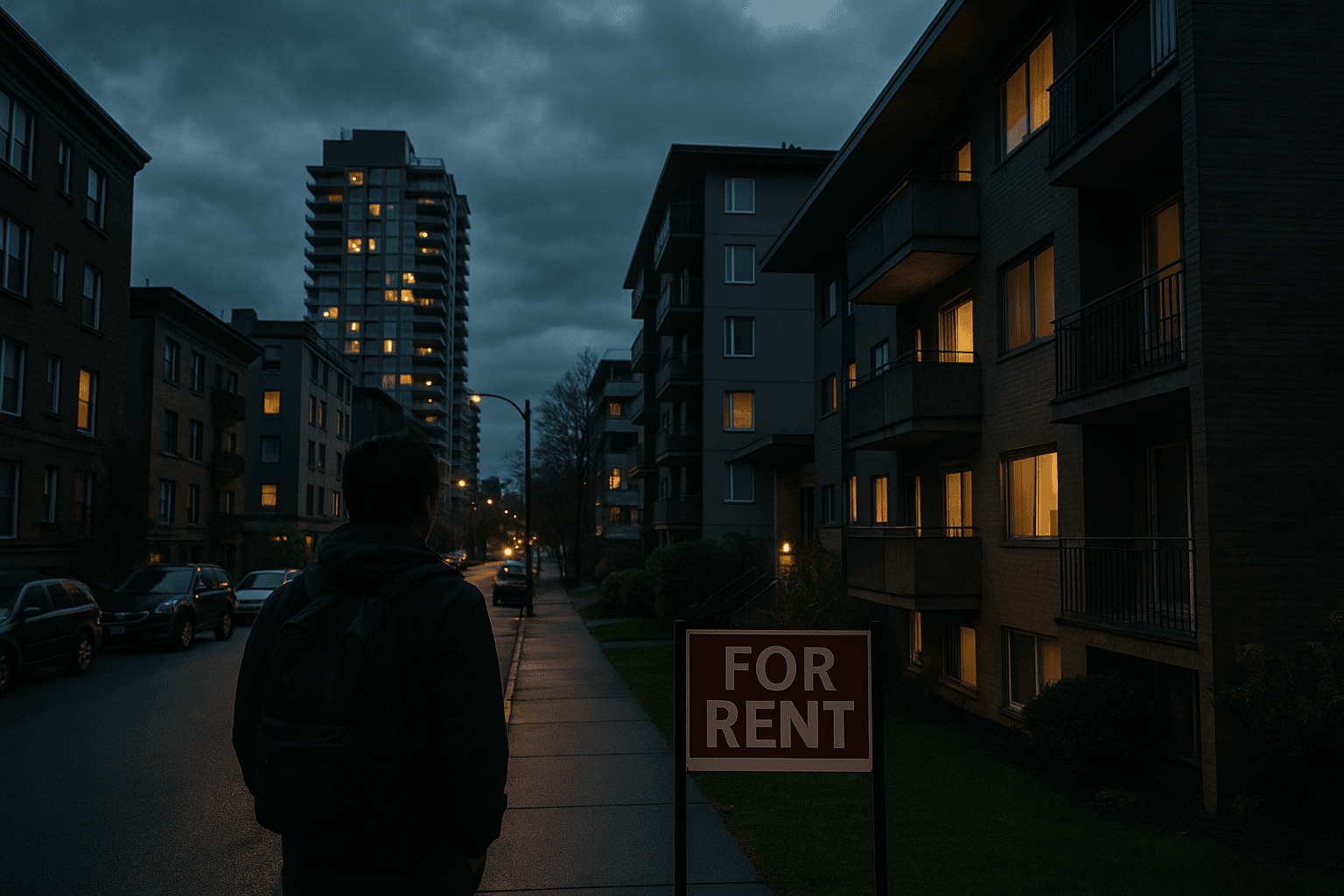
In Vancouver, renters are being squeezed harder than ever. As housing costs continue to climb while wages stagnate, the dream of stable, affordable living has become increasingly out of reach for thousands of residents. For many of us, rent hikes mean sacrificing food, healthcare, or even staying in the city we’ve called home for years.
We need rent control. Not a half-measure or inflation-tied policy full of loopholes—but real, binding, unit-based rent control that protects renters and helps preserve the communities that make Vancouver vibrant.
The Vancouver Rental Crisis: A Snapshot
Vancouver is known for its natural beauty, cultural diversity, and thriving economy. But it’s also become known for something much less glamorous: unaffordable rent. Here’s what renters in our city are up against.
Rising Rents
According to CMHC, the average monthly rent for a one-bedroom apartment in Vancouver has surpassed $2,300. For two-bedrooms, it’s well over $3,000. These numbers are even higher in popular neighbourhoods like Mount Pleasant and Kitsilano.
Stagnant Wages
While housing costs skyrocket, wages have not kept pace. A renter in Vancouver making minimum wage ($17.40/hr as of 2024) would have to work over 80 hours a week to afford the average one-bedroom at 30% of their income—what’s considered “affordable” by housing standards.
Displacement on the Rise
Thousands of tenants have been pushed out due to renovictions and demovictions. These tactics allow landlords to evict tenants under the guise of renovations or redevelopment, only to relist units at much higher prices.
“I was renovicted last year from my apartment in East Van after living there for nearly a decade. My rent went from $1,250 to $2,400 for a similar unit just blocks away.” – Jules, 37, Vancouver renter
What Is Rent Control—and What It Isn’t
There’s a lot of confusion about what rent control really means, especially in the context of British Columbia.
BC’s Current Model
Under current rules, landlords in BC can increase rent annually based on the rate of inflation (3.5% in 2024). However, once a tenant leaves a unit, the landlord can set the rent at any amount for the next tenant. This is known as vacancy decontrol, and it completely undermines the intent of rent control.
What Real Rent Control Looks Like
True rent control isn’t just about limiting annual increases—it’s about preventing housing speculation and stabilizing communities. Here’s what effective rent control policies include:
-
Rent increase caps tied to the unit, not just the tenancy
-
Restrictions on vacancy decontrol
-
Enforcement mechanisms to penalize illegal increases or evictions
-
Tighter regulations around renovictions and fixed-term leases
ALSO READ: Why you should invest in a new roof
Why Vancouver Needs Rent Control Now
1. Preventing Mass Displacement
When rents rise unpredictably, renters are forced to move—not because they want to, but because they can’t afford to stay. Rent control helps keep people in their homes and in their neighbourhoods.
2. Reducing Homelessness
Stable rent helps reduce housing precarity. In Vancouver, where over 2,000 people are unhoused, many are only a rent increase away from the street. Affordable housing and strong tenant protections are key to addressing this crisis.
3. Protecting Vulnerable Communities
Renters are disproportionately made up of low-income earners, seniors, students, and newcomers. Without rent control, these groups face higher risks of eviction and exploitation.
4. Preserving Vancouver’s Character
From baristas to artists to teachers, Vancouver’s essential workers can no longer afford to live in the city they serve. Without rent control, we risk losing the soul of our city to speculation and short-term profits.
Debunking the Myths Around Rent Control
Critics of rent control often recycle the same arguments. Let’s address a few:
“It discourages developers from building more housing.”
Not necessarily. Rent control can exempt new builds for a set period, allowing for investment while still protecting tenants over the long term. In fact, many European cities with strong rent control still see robust construction.
“Landlords will stop maintaining their properties.”
With proper enforcement and incentives, landlords can still be held accountable for upkeep. Rent control doesn’t mean neglect—it means fairness.
“The market will regulate itself.”
The market has had decades to “correct” itself. Instead, we’ve seen record profits for developers and landlords while renters struggle with rising debt and declining living standards.
What Vancouver Renters Are Saying
The numbers are only part of the story. Here are just a few voices from our community:
“Every year, I brace for the notice. Even with the inflation cap, my rent has gone up over $100 in two years. I live in fear of having to leave the city.” – Thomas, renter in South Granville
“I’m 65 and living on a fixed income. I’ve watched my neighbourhood transform into luxury condos. I don’t know where I’ll go if I get evicted.” – Lana, West End resident
“I rent with two roommates just to stay in the city. We’re all full-time workers, but none of us could afford a place on our own.” – Asha, nurse in Downtown Eastside
What the Data Shows
Below is a comparison of rent increase trends vs wage growth in Vancouver over the past five years:
| Year | Avg Rent Increase | Avg Wage Growth | Vacancy Rate |
|---|---|---|---|
| 2019 | 6.0% | 2.3% | 1.1% |
| 2020 | 3.9% | 1.8% | 2.2% |
| 2021 | 5.2% | 2.7% | 1.4% |
| 2022 | 6.6% | 3.1% | 1.2% |
| 2023 | 7.2% | 2.9% | 0.9% |
Source: CMHC, BC Stats
The math is simple: rent is rising more than twice as fast as wages—and vacancy rates are shrinking. This makes it harder for renters to negotiate or find affordable alternatives.
What We Can Do: Solutions and Action
If we want to stop displacement and build a more equitable Vancouver, here’s what we need:
1. Reinstate Real Rent Control
-
Tie rent limits to the unit, not the tenant
-
Prevent massive increases between tenancies
-
Cap rent at reasonable rates that reflect inflation and community needs
2. End Vacancy Decontrol
Landlords should not be allowed to reset the rent to market rates when a unit turns over. This only incentivizes evictions and speculative investment.
3. Strengthen Tenant Rights
-
Close loopholes in renoviction and demoviction laws
-
Crack down on abusive fixed-term leases
-
Fund legal aid for tenants facing eviction
4. Expand Non-Market Housing Options
Support and invest in:
-
Co-operative housing models
-
Non-profit housing developments
-
Community land trusts
Learn more about how No Place Like Home Vancouver’s campaigns are pushing for these changes.
How You Can Help
Whether you’re a renter, a homeowner, or simply someone who cares about your neighbours, there are ways to get involved.
-
Join a tenant organization like the Vancouver Tenants Union
-
Share your story on social media or with advocacy groups
-
Attend city council meetings and speak up during public hearings
-
Sign petitions and demand action from your MLA
-
Volunteer with local groups pushing for housing justice
Check out our Get Involved page for events, organizing opportunities, and ways to support our mission.
Conclusion
Vancouver is in the middle of a housing emergency. Renters are being priced out, displaced, and silenced by a system designed to prioritize profit over people. Rent control is one of the most effective tools we have to stop the bleeding—and we need it now.
This isn’t about punishing landlords or freezing the market. It’s about dignity, fairness, and the right to remain in our communities. If we want a livable Vancouver for all—not just for the wealthy—we must demand real rent control and housing justice for renters across the city.